Mining and Quarrying
What is mining and quarrying?
Man has been mining since the early development of society e.g. Stone, Bronze and Iron ages. Virtually every manufactured item contains mineral products which have been mined or quarried.
Quarrying is normally associated with the extraction of rock using opencast techniques and leaving large holes in the ground.
1km of motorway requires 125,000 tonnes of crushed stone.
Mining can be opencast but more often involves digging tunnels below ground. Normally topsoil and underlying bedrock is removed (known as overburden) and stacked on spoil heaps nearby. Rock from tunnelling is added to this.
Mined compounds are normally classified into four groups:
- Metals (copper and aluminium)
- Industrial minerals (lime, soda ash)
- Construction materials (sand, gravel)
- Energy materials (coal, uranium)
Global economic aspects
- As the human population grows, there is a greater demand for minerals.
- Since 1900, there has been a thirteen-fold increase in demand.
- In the 70’s there were concerns that certain minerals would run-out.
- Discovery of new resources and an increase in recycling has largely prevented the total depletion of many mineral resources. Some minerals, if recycled, could possibly be thought of as ‘renewable resources’?
- Many countries export minerals and this is an important source of income.
Environmental impacts
In 1556, Georgius Agricola noted the devastating effects of mining:
 of the detractors [of mining] that the fields are devastated by mining operations, for which reason formerly Italians were warned by law that no one should dig the earth for metals and so injure their very fertile fields, their vine yards, and their olive groves. Also they argue that the woods and groves are cut down, for there is a need for an endless amount of wood for timbers, machines, and the smelting of metals. And when the woods and groves are felled, then are exterminated the beasts and birds, very many of which furnish a pleasant and agreeable food for man. Further, when the ores are washed, the water which has been used poisons the brooks and streams, and either destroys the fish or drives them away. Therefore the inhabitants of these regions, on account of the devastation of their fields, woods, groves, brooks and rivers, find great difficulty in procuring the necessaries of life, and by reason of the destruction of the timber they are forced to greater expense in erecting buildings.
 Source


 Print Friendly Page
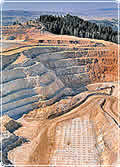
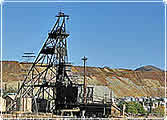 Today, mining and quarrying have the following environmental impacts:
 Climate Change


 Poison-Eating Bugs Strike Gold
 Bioleaching
 Read about such a success story in Nottinghamshire:
What's your opinion?
Average rating


Current rating: 5/5 (from 1 votes cast)